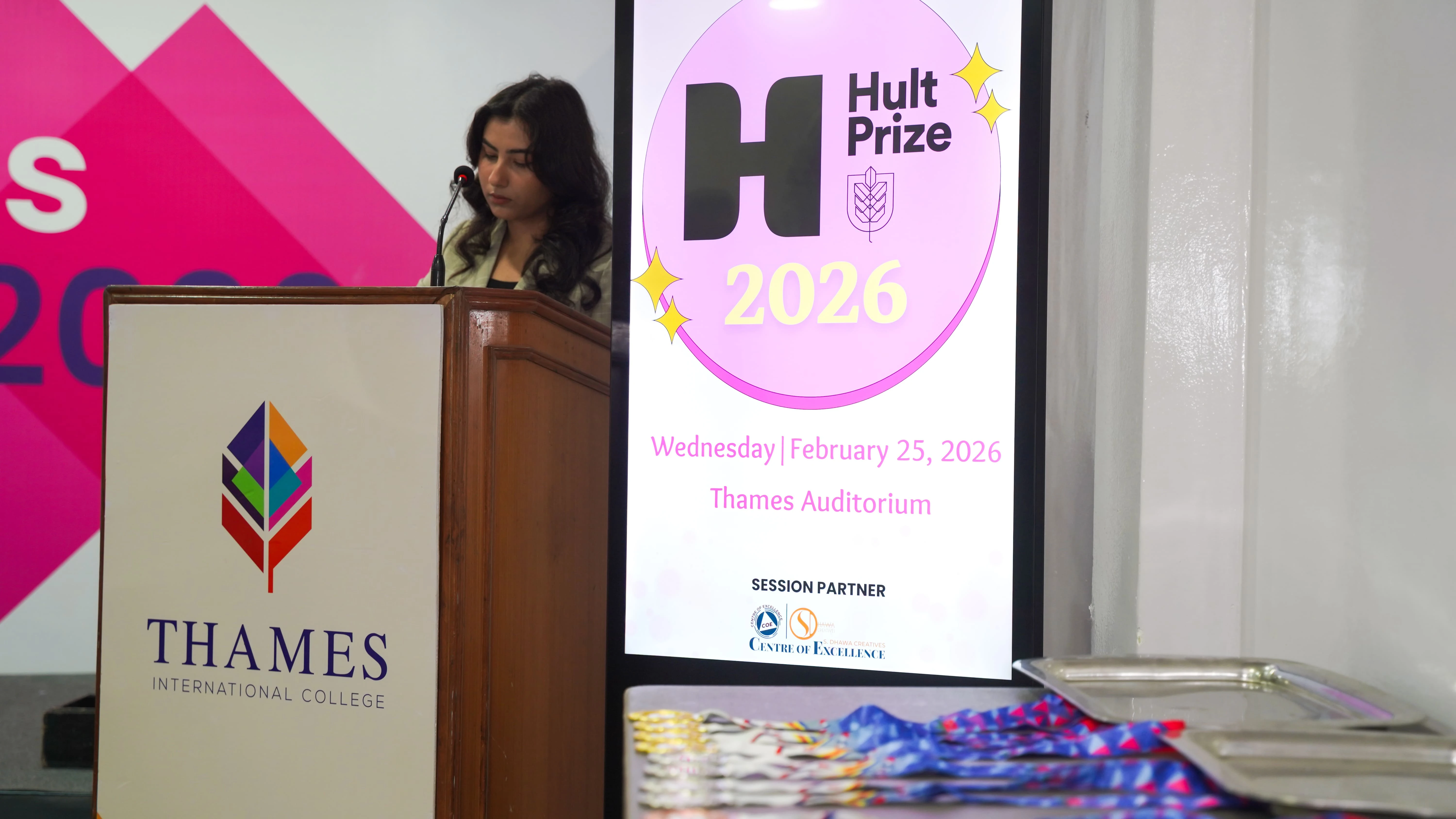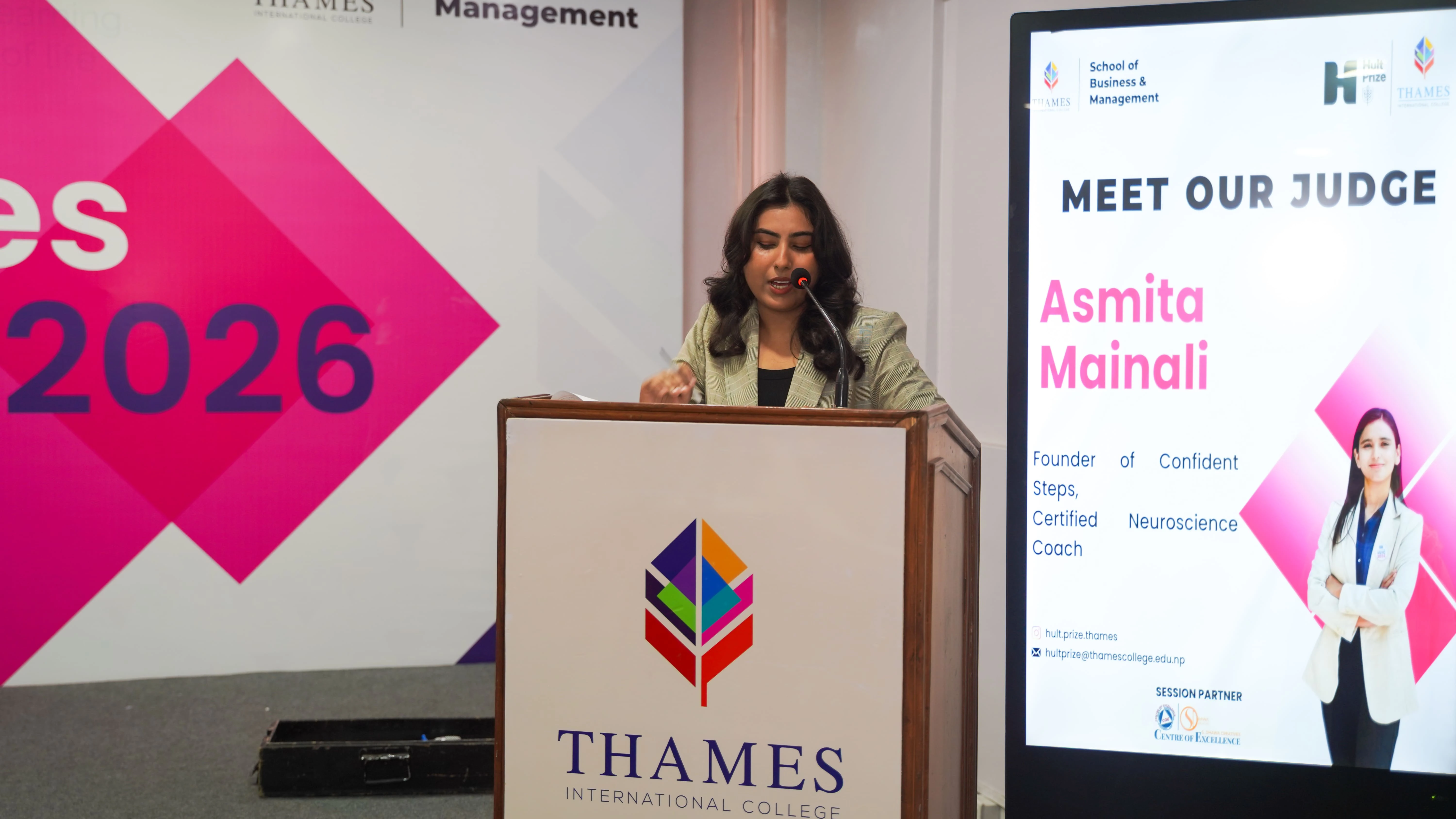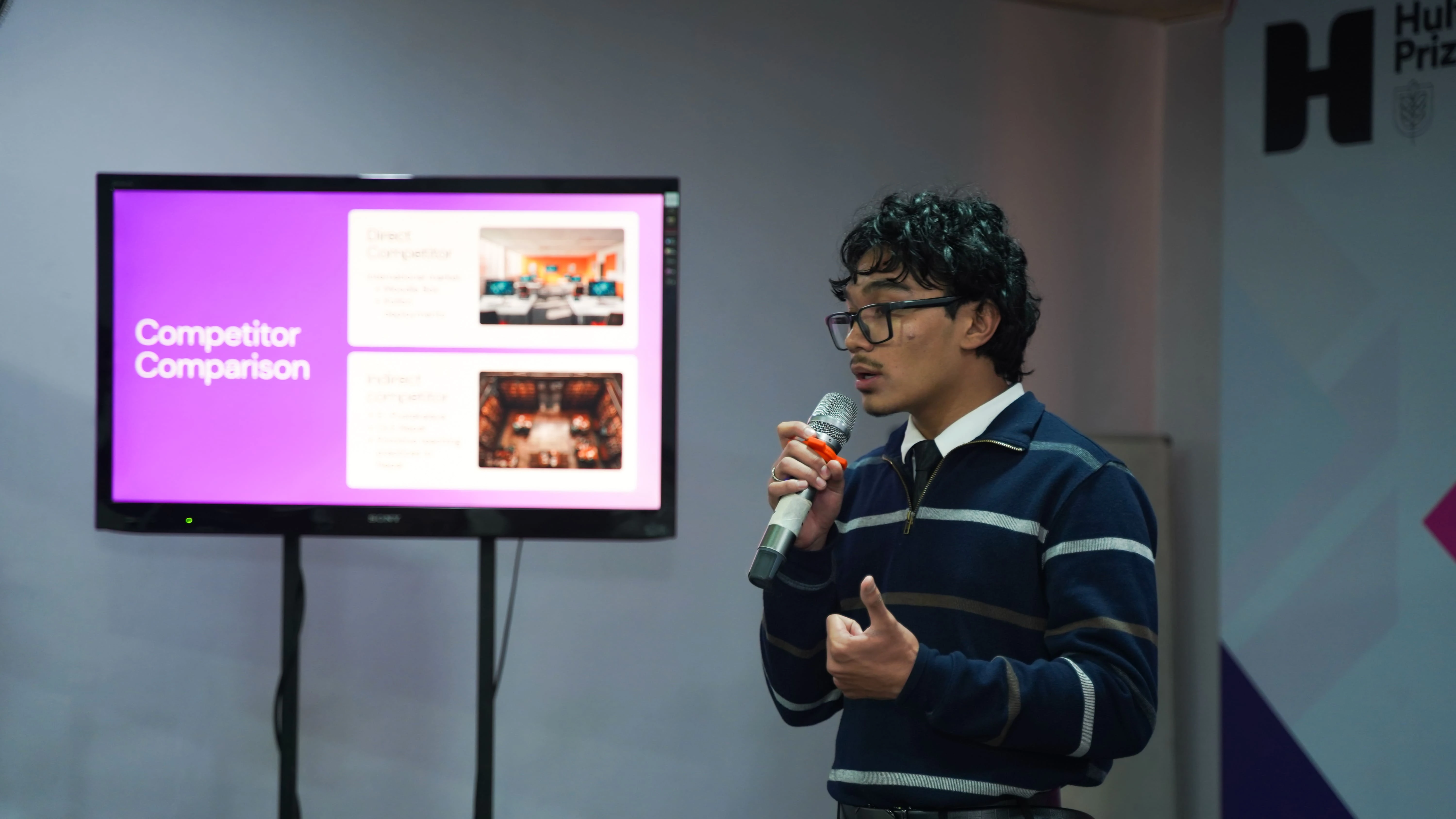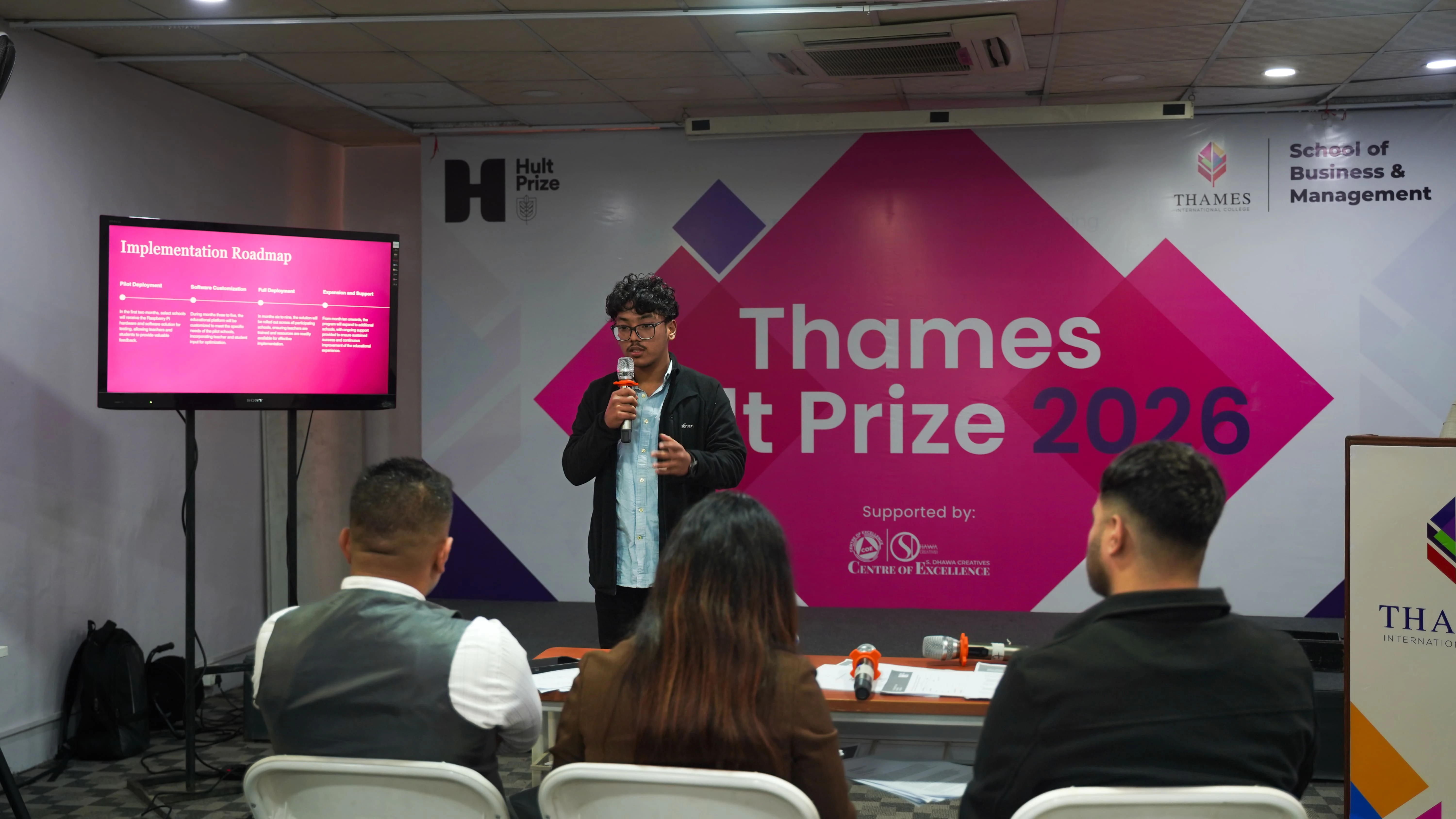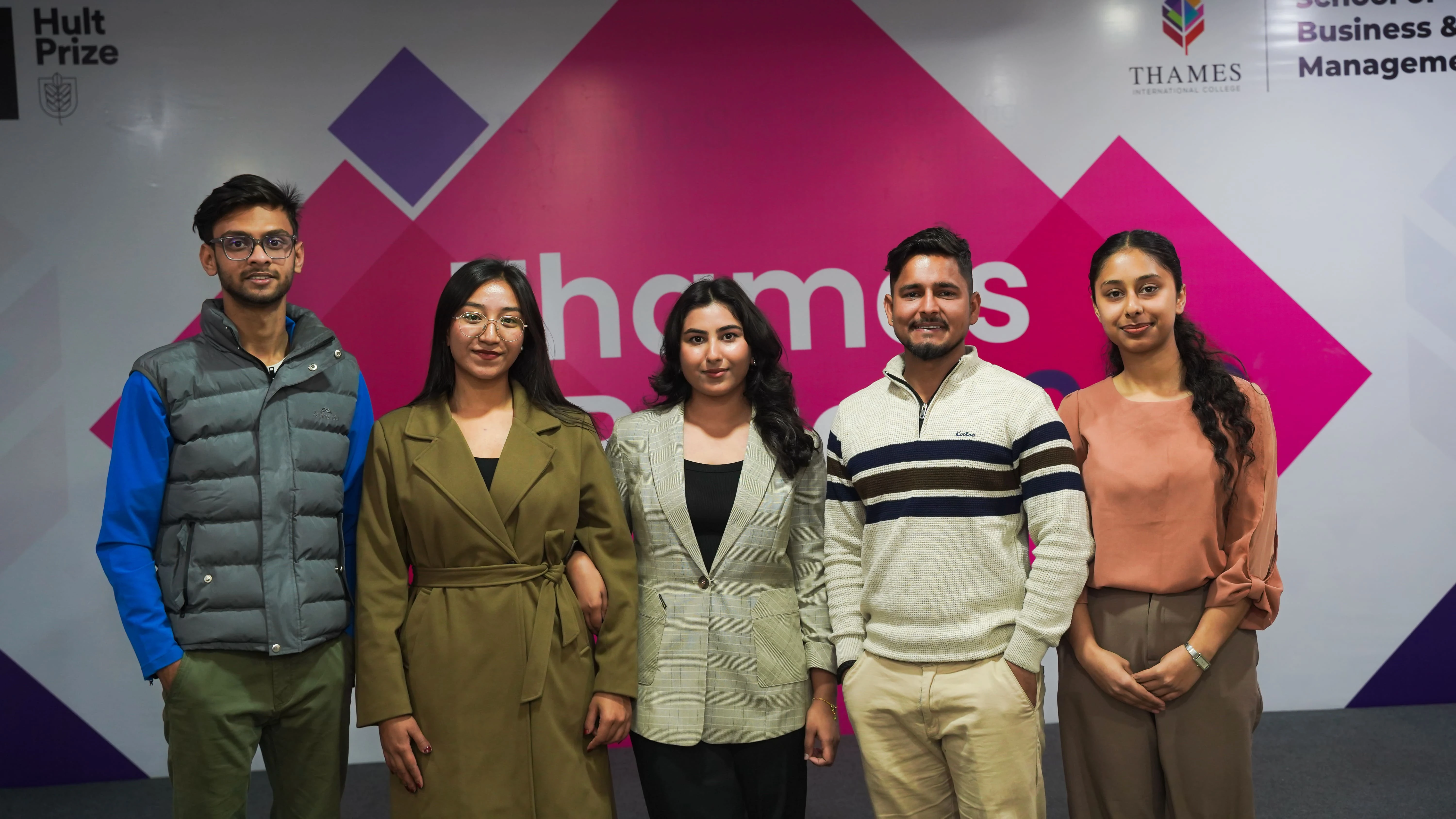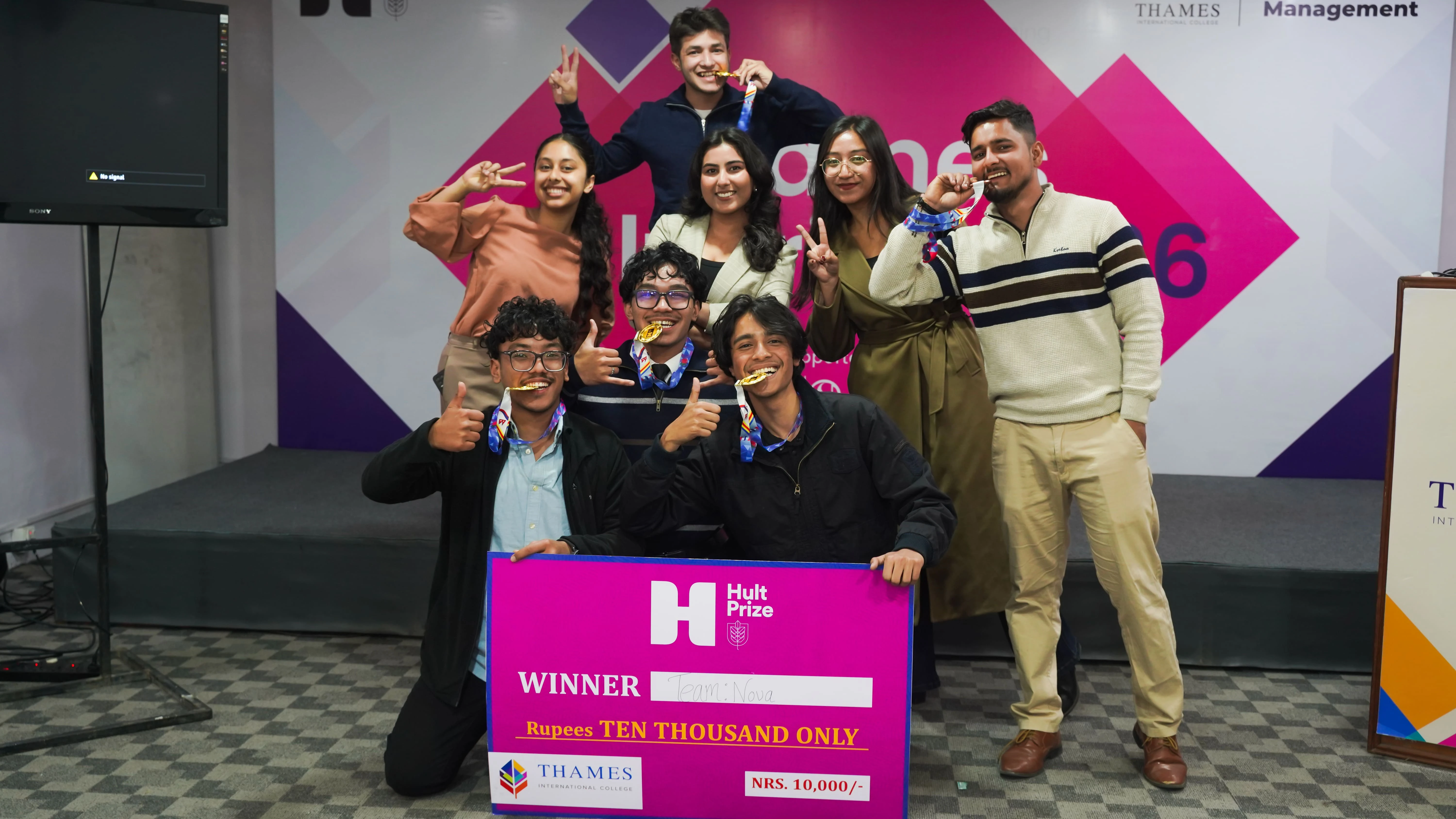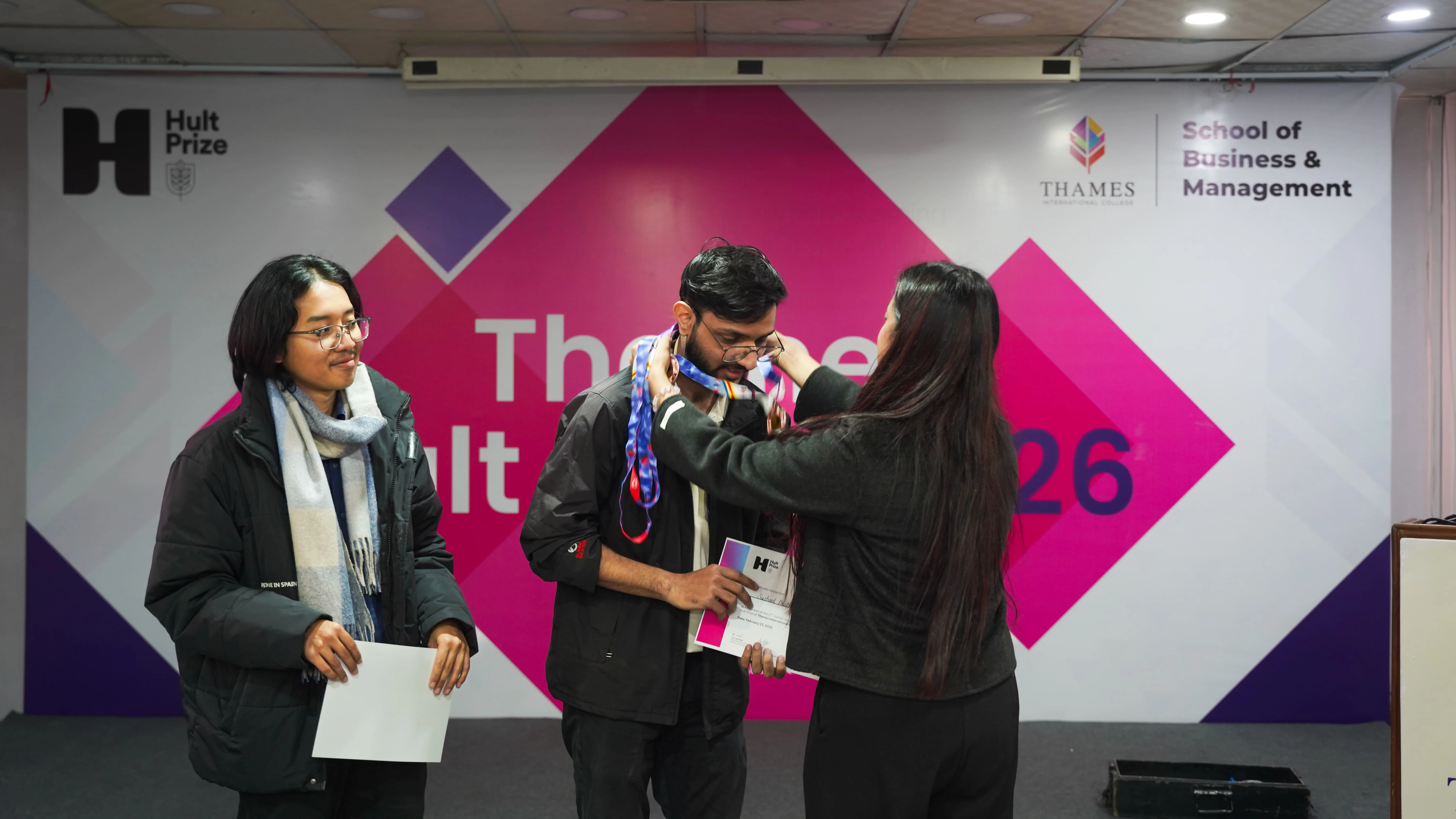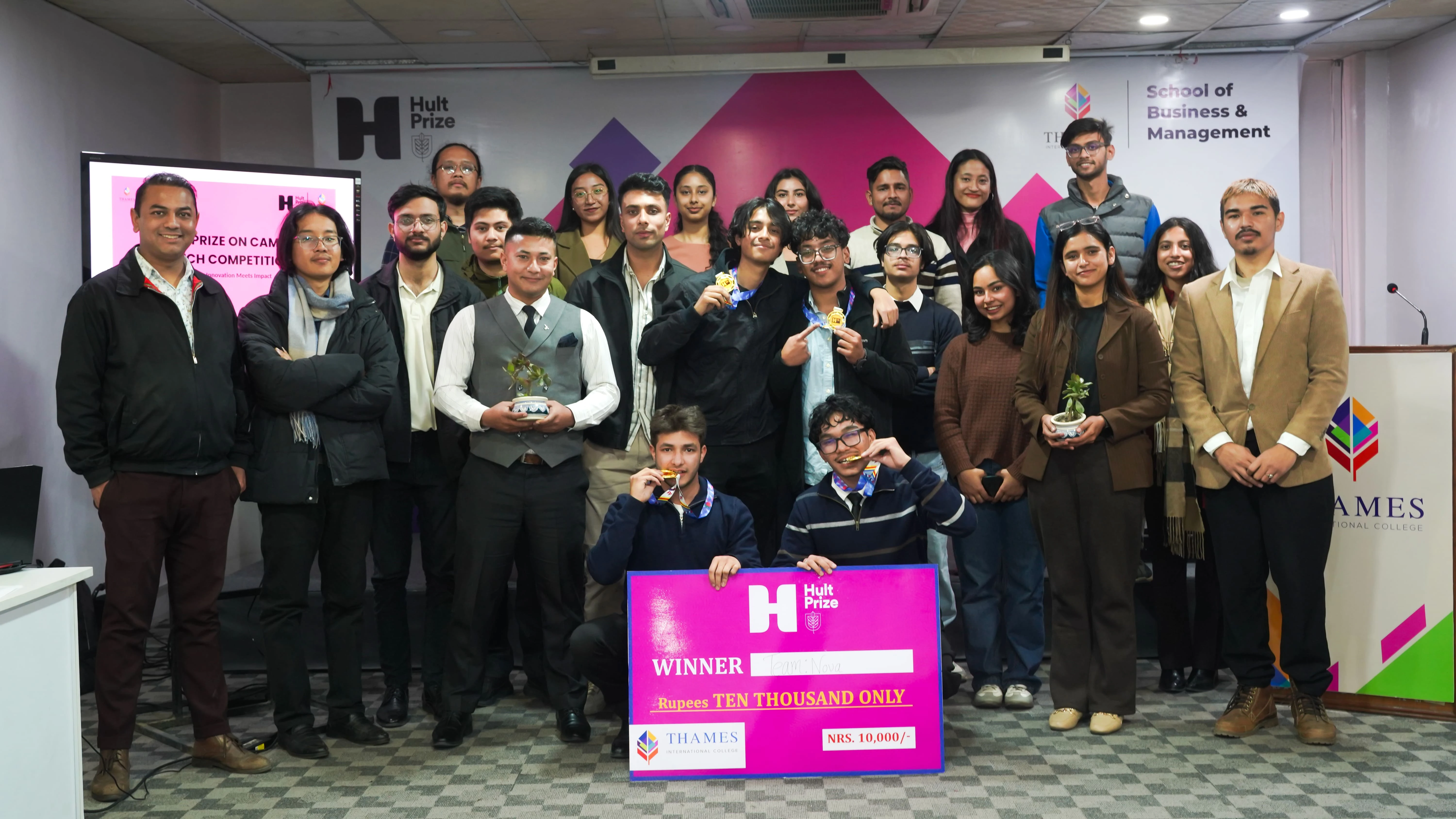




The Hult Prize On Campus Program 2026 at Thames International College was successfully conducted on February 25, 2026, bringing together innovative and entrepreneurial minds to present impactful business ideas aligned with global challenges. The event served as a platform for students to showcase their creativity, problem-solving abilities, and business acumen.
Before the main competition, a series of intensive preparatory sessions were organized to equip participants with the necessary knowledge and skills to develop strong and viable business ideas. These sessions played a crucial role in shaping the quality of the final pitches.
-Design Thinking & Brainstorming Session
This foundational session introduced participants to the concept of design thinking, emphasizing empathy and user-centric problem-solving. Teams were guided to deeply understand real-world challenges by analyzing user needs and behaviors. Through structured brainstorming techniques such as mind mapping and rapid ideation, participants generated a wide range of creative solutions. The session encouraged out-of the-box thinking and helped teams refine raw ideas into meaningful problem statements.
-Business Model Canvas
In this session, participants learned how to translate their ideas into structured business models using the Business Model Canvas framework. Facilitators explained each component in detail, including customer segments, value propositions, channels, customer relationships, revenue streams, key activities, resources, partners, and cost structures. Teams actively worked on their own canvases, which helped them visualize how different parts of their business connect and identify gaps or areas for improvement.
-Business Plan Development-Marketing Plan
This session focused on building strong market strategies to ensure the success of the business idea. Participants were guided on how to conduct basic market research, identify target customers, and analyze competitors. The facilitators also emphasized branding, positioning, and creating unique selling propositions (USP). Additionally, teams learned about promotional strategies, including digital marketing, social media campaigns, and customer engagement techniques to effectively reach their audience.
-Financial Plan
Understanding the financial viability of a business is crucial, and this session provided participants with essential financial knowledge. Teams were taught how to estimate costs, forecast revenues, and create basic financial projections. Concepts such as break-even analysis, pricing strategies, and budgeting were introduced in a simplified manner. This
session helped participants evaluate whether their ideas were economically sustainable and scalable in the long run.
-Operational Strategy and Pitch Deck Masterclass
This combined session provided participants with a comprehensive understanding of both executing business ideas and presenting them effectively. It focused on transforming concepts into practical operational strategies by covering areas such as process planning, supply chain coordination, resource optimization, and scalability, while also emphasizing alignment with overall business goals. At the same time, participants were trained to communicate their ideas through compelling pitch decks, learning key elements like problem-solution fit, market opportunity, business model, and financials. The session further enhanced their storytelling, presentation skills, and ability to confidently handle judges’ questions, preparing them for real-world entrepreneurial and pitching environments.
Main Competition
The main event marked the culmination of weeks of preparation, learning, and idea development. It was designed in a structured and competitive format to ensure a fair, transparent, and comprehensive evaluation of all participating teams. The competition not only tested the viability of business ideas but also assessed participants’ presentation skills, critical thinking, and ability to perform under pressure. The competition featured four highly motivated and innovative teams:
Each team presented unique solutions targeting real-world social and business challenges. Their ideas reflected a strong blend of creativity, research, and strategic thinking. From technology driven innovations to impact-oriented business models, all teams demonstrated a commendable level of effort and entrepreneurial mindset.
1.Pitching Segment
In the first segment, each team was allocated 4 minutes to present their business idea, followed by 4 minutes of Q&A with the judges. This stage required teams to deliver a concise yet impactful presentation, clearly highlighting their problem statement, proposed solution, target market, business model, and financial viability within a limited timeframe.
The Q&A session played a crucial role, as judges challenged the teams on various aspects such as feasibility, scalability, innovation, and real-world application. This segment tested not only the clarity of the idea but also the confidence, preparedness, and depth of understanding of each team.
2.Judges Deliberation Segment
The second segment provided a deeper level of evaluation. Judges invited each team individually for further interaction, allowing them to ask follow-up questions that may not have been covered during the initial pitch.
This round created an opportunity for teams to clarify doubts, elaborate on specific aspects of their business model, and strengthen their overall proposal. It also ensured fairness in judgment by giving every team equal time to address gaps and present additional insights. This segment reflected a more conversational and analytical approach, focusing on the practical viability and long-term impact of the ideas.
The event was evaluated by an esteemed panel of judges consisting of Asmita Mainali, Saugat Bastola, and Sunil Phuyal. With their diverse expertise and professional experience, the judges provided valuable insights, constructive feedback, and critical evaluation of each team’s idea. Their presence not only ensured the credibility of the competition but also enriched the overall learning experience for participants. After a rigorous evaluation process that considered innovation, feasibility, scalability, presentation, and overall impact, the final results were announced:
Team Nova stood out for its exceptional clarity of concept, strong execution strategy, and impactful solution, making it the most promising venture among the participants. Team ZEROxTRACE impressed the judges with its innovative approach and well-structured business model, securing the first runner-up position. Team TechCare demonstrated a practical and socially relevant solution, earning the second runner-up position.
The competition concluded on a high note, celebrating not just the winners but the efforts, learning, and growth of all participating teams.
The Hult Prize OnCampus Program 2026 at Thames International College was a remarkable success, fostering innovation, collaboration, and entrepreneurial thinking among students. The event not only provided a competitive platform but also a valuable learning journey through its well-structured preparatory sessions and engaging competition format. It served as a stepping stone for aspiring entrepreneurs to transform their ideas into impactful ventures.