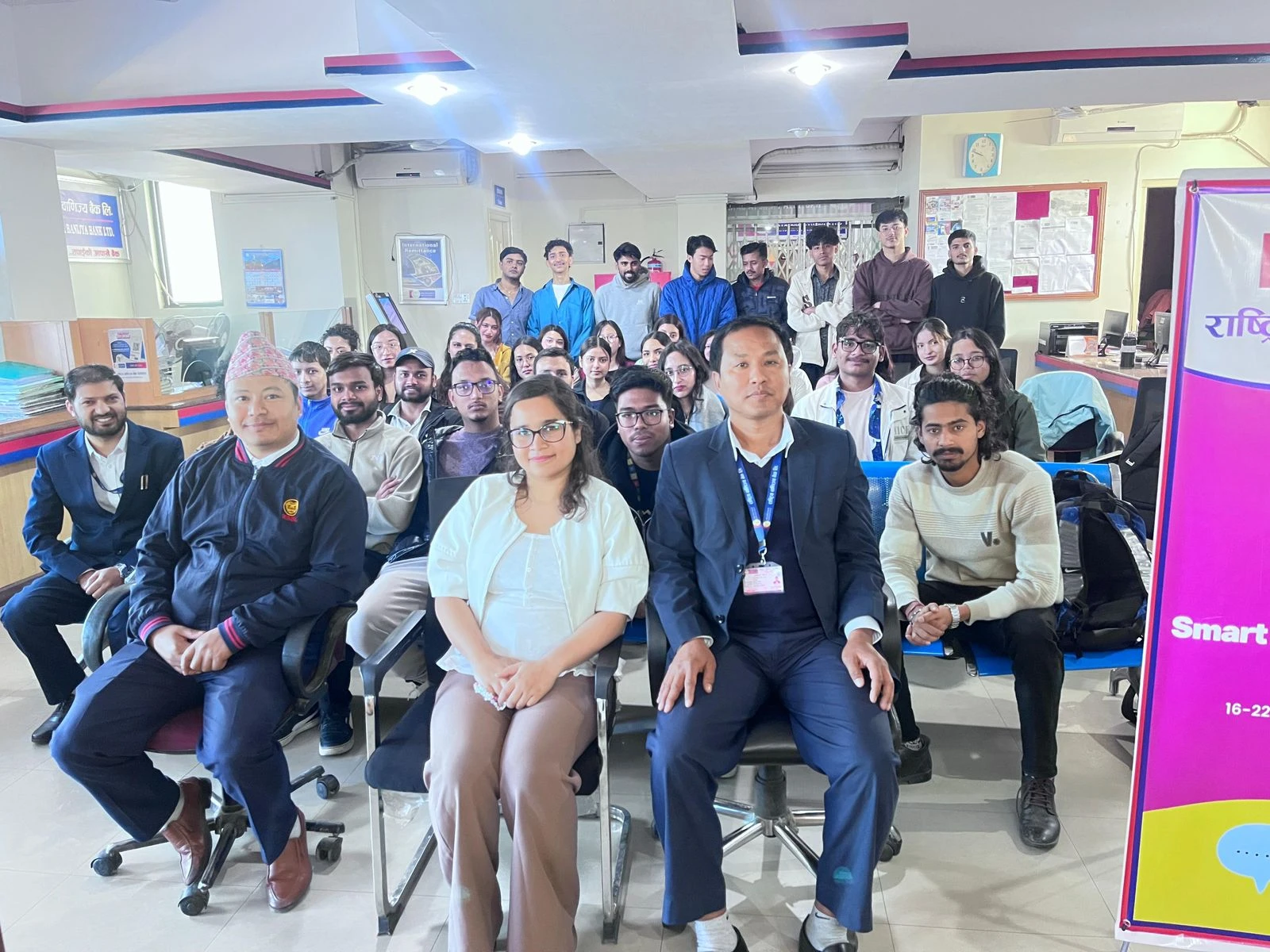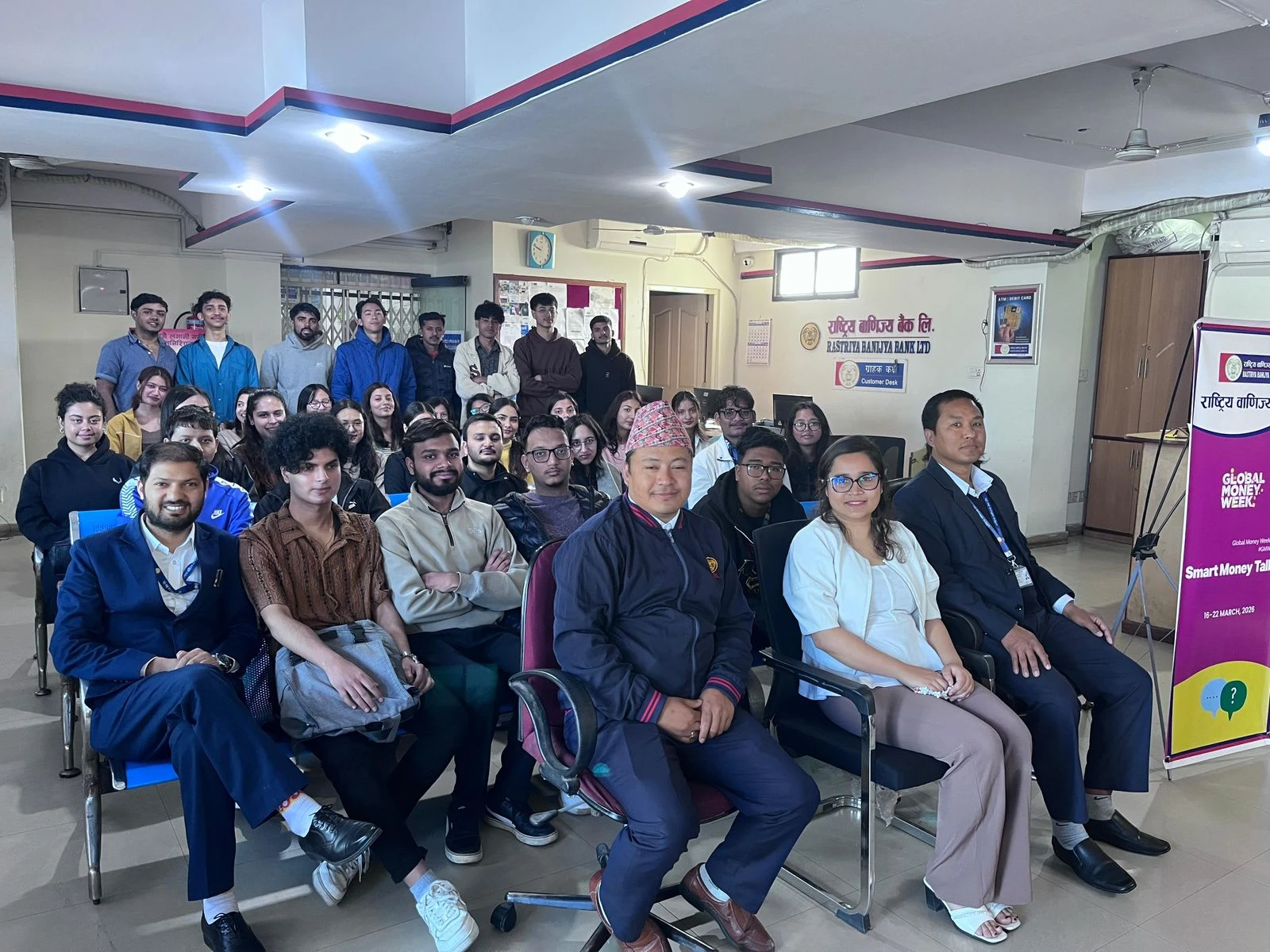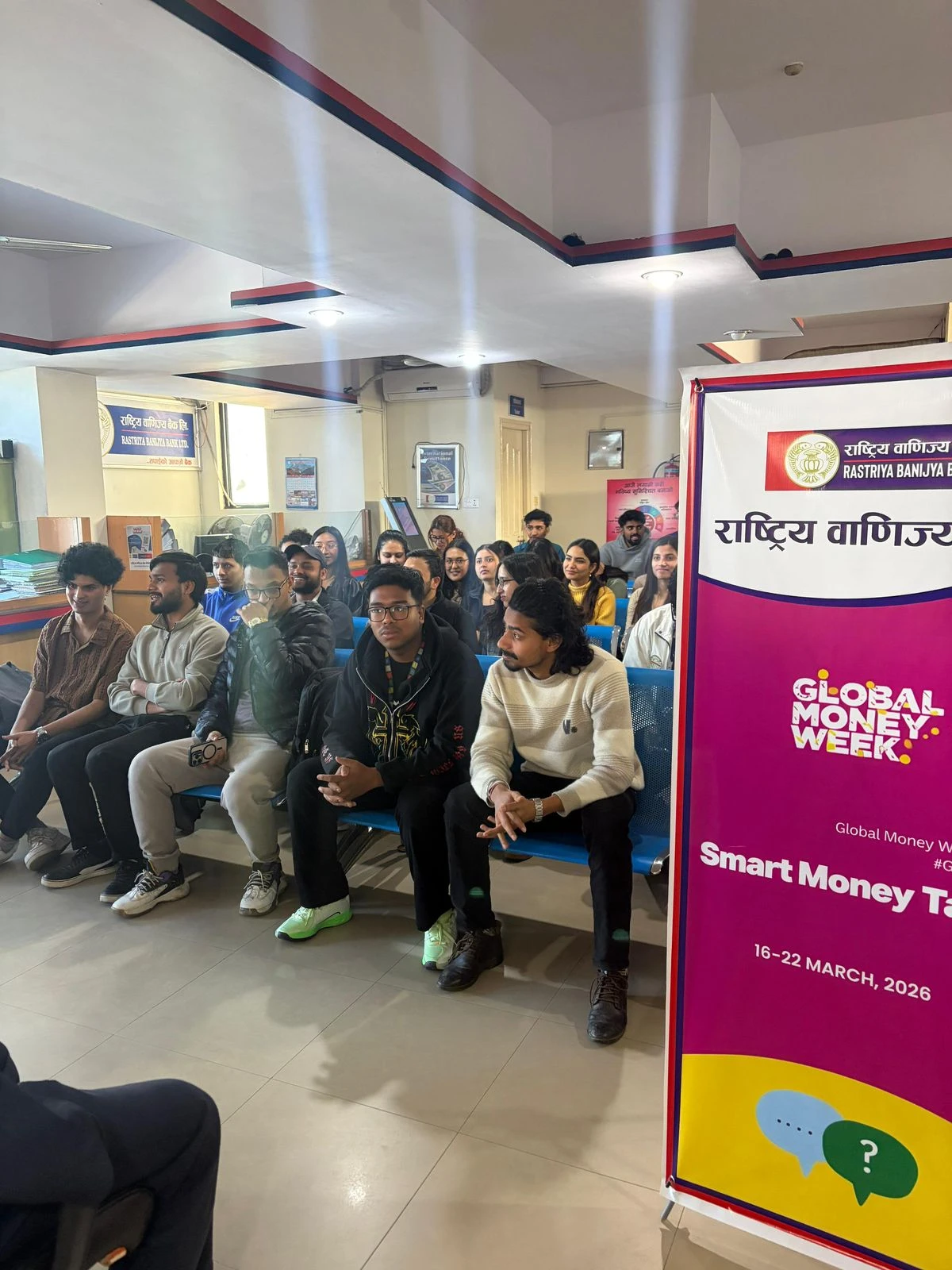


An academic field visit to Rastriya Banijya Bank was successfully conducted for BBA 7th semester students of Thames International College as part of “Global Money Week.” The visit aimed to provide students with practical exposure to the operations of a commercial bank and to strengthen their understanding of real-world financial systems.
The session was facilitated by bank representatives who delivered comprehensive insights into various functional areas of banking. The program focused on bridging the gap between theoretical knowledge and practical application by familiarizing students with day-to-day banking practices and institutional processes.
The program covered the following major areas:
- General Banking Operations: Students were introduced to the overall structure and functioning of a commercial bank. The session explained account handling, customer service processes, and internal workflows that ensure smooth banking operations especially in the government banks. Practical examples helped students understand how different departments coordinate to deliver efficient financial services.
- Loan Department: Students gained insights into the lending process, including loan types, credit assessment, documentation, and risk management. The session highlighted how banks evaluate borrowers, manage credit risks, and ensure responsible lending practices, providing a clear understanding of financial decision-making in banking. Also, it was very helpful for the students who are already involved in their businesses.
- Marketing Activities: The session also emphasized the role of marketing in the banking sector. Students learned how banks design and promote financial products, attract customers, and maintain long-term relationships. The discussion covered branding, customer engagement strategies, and the importance of trust and service quality in competitive banking environments.
- Digital Banking: A key focus was placed on the growing importance of digital banking services. Students explored how digital platforms, mobile banking, and online transactions are transforming the banking experience. The session highlighted the benefits of convenience, efficiency, and accessibility, while also addressing security measures and the need for digital awareness among customers.
The visit followed an interactive approach, allowing students to engage directly with banking professionals, ask questions, and gain practical insights into industry practices.
Students reported a better understanding of banking operations, increased awareness of digital financial services, and enhanced knowledge of how theoretical concepts are applied in real-life scenarios. The experience contributed to building their confidence and preparedness for future professional roles in the financial sector.